Prime Highlights
- Ainnocence has unveiled CosmeticAI™, an AI-driven platformthat designs cosmetic and dermatological ingredients using a sequence-first, computer-led approach.
- The platform aims to cut development time and uncertaintyby defining performance, safety, and formulation requirements at the design stage.
Key Facts
- CosmeticAI can generate and virtually evaluate thousands of candidate molecules, reducing lab testing to about 50–150 molecules across three design–test cycles.
- The system supports both optimisation of existing molecules and full de novo design, enabling the creation of new cosmetic actives beyond current formulations.
Background
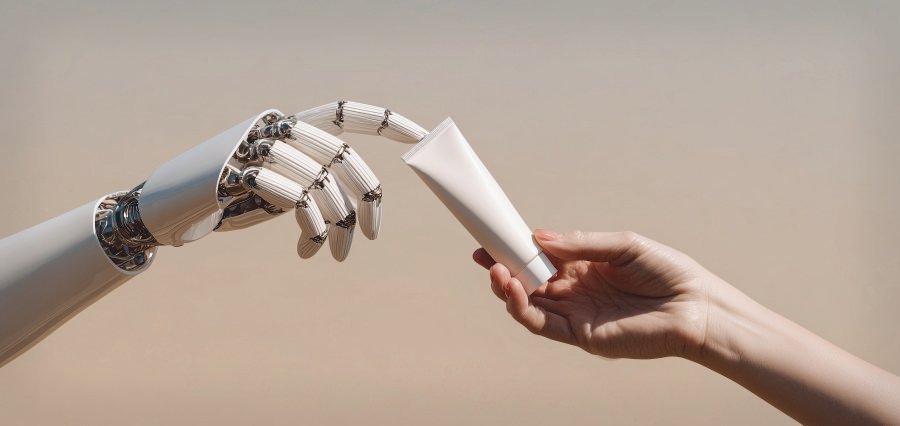
Ainnocence, a California-based biotechnology firm, has launched CosmeticAI™, a new artificial intelligence platform that designs cosmetic and dermatological ingredients with a level of precision usually seen in biologics research.
The company said CosmeticAI moves ingredient discovery from traditional trial-based screening to a sequence-first, computer-led design process. Instead of testing large chemical libraries in labs, the platform generates and evaluates thousands of candidate molecules virtually, based on defined targets and performance goals.
“Our aim is to make cosmetic ingredient development predictable, not exploratory,” said Ainnocence founder and chief executive Lurong Pan. He added that the system allows teams to define performance, safety and formulation needs at the design stage, reducing uncertainty in later testing.
CosmeticAI builds on Ainnocence’s existing in-silico engineering framework used for small molecules and formulation work. It extends this system into peptide and cosmetic active design, with an added layer that checks formulation compatibility early in the process.
The company said the platform can optimise molecules for several factors at the same time, including biological activity on skin, transport across the epidermis, formulation stability and low irritation risk. This multi-objective process helps resolve trade-offs before experiments begin.
By applying this selection pressure early, Ainnocence claims that most projects need only three design–test cycles, with experimental testing limited to about 50 to 150 molecules. This approach shortens development timelines and cuts costs while keeping diversity in candidate ingredients.
CosmeticAI supports both fine-tuning of known molecular classes and full de novo design, opening doors to new cosmetic actives beyond existing formulas.
Ainnocence said it is open to partnerships with cosmetic brands, research groups and R&D teams that want to use sequence-first molecular design for next-generation skin-care ingredients.