Innovation in Aesthetics
Aesthetic medicine has traveled a long distance from where it started. The treatments available today, the technology behind them, and the experience patients have when seeking care have all shifted in ways that would have been difficult to predict even a couple of decades ago. What was once a narrow field serving a small segment of the population has grown into a sophisticated, science-driven sector with a wide and diverse patient base. The medical aesthetics industry is no longer defined by a handful of procedures; it is defined by the pace and depth of its innovation.
Precision Is Reshaping Aesthetic Medicine
In the earlier days of aesthetic treatment, outcomes depended heavily on individual practitioner skill and a fair amount of clinical judgment that was difficult to standardize. Two patients with similar concerns could walk away with noticeably different results, and the reasons were not always easy to explain or address.
Technology has fundamentally changed this. Advanced imaging and diagnostic tools now give practitioners a far more detailed picture of what is happening in the skin and tissue before any treatment begins. Structure, depth, tone, and condition can all be assessed with a level of accuracy that simply did not exist before. Treatment plans built on this quality of information are more targeted, more consistent, and more likely to deliver outcomes that match what the patient was hoping for. The medical aesthetics industry has moved from informed guesswork toward genuine precision, and patients are noticing the difference.
Non-Invasive Treatments Expanding Access
The growth of non-invasive and minimally invasive treatments has arguably done more to expand this field than any other single development. Surgical procedures carry real barriers, including cost, recovery time, risk, and the significant commitment of undergoing an operation. For many people, those barriers were reason enough to rule out treatment entirely.
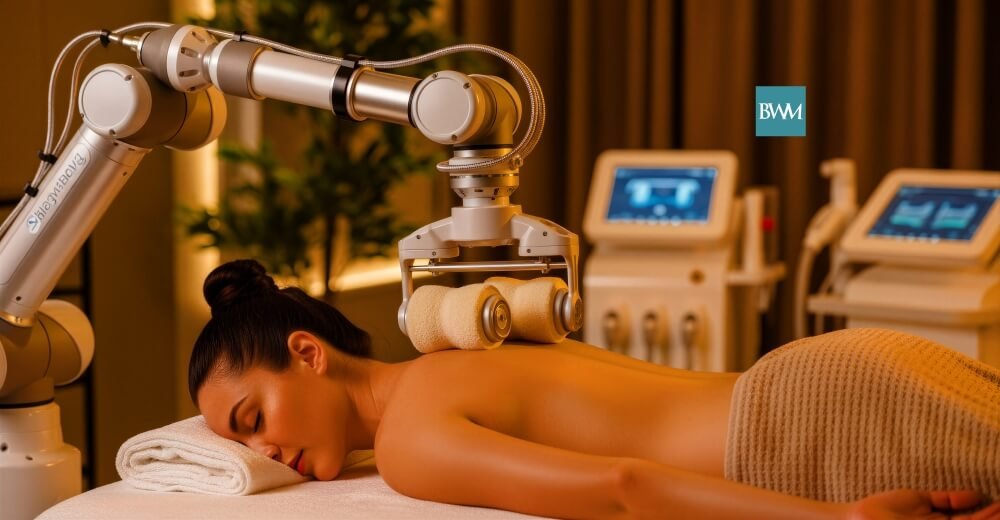
Energy-based technologies have largely removed those barriers for a wide range of concerns. Radiofrequency, focused ultrasound, and light-based treatments can address skin laxity, texture, pigmentation, and contour without any incision and with recovery measured in hours. Patients can receive treatment and return to their normal routine almost immediately. This practical accessibility has brought the medical aesthetics industry to a much broader audience, people who wanted results but could not, or would not, commit to surgery.
Personalized Care Becoming the Standard
Standardized treatment protocols have their place, but they have their limits too. Skin is not uniform. It behaves differently across different ages, ethnicities, lifestyles, and health histories. A treatment that produces excellent results for one patient may be entirely wrong for another, and a field that ignores this reality will consistently fall short.
Personalization has become a central priority. Devices with adjustable parameters, diagnostic tools that capture individual skin characteristics, and a growing body of research into how different skin types respond to specific technologies have all contributed to a more tailored approach to care. The medical aesthetics industry is increasingly able to build treatment plans around the specific person sitting in the consultation chair, not a general profile that the person approximately fits.
Raising Standards in Safety and Training
Sophisticated technology in the hands of inadequately trained practitioners is a risk the field cannot afford to ignore. As devices have become more powerful and treatments more complex, the importance of proper education, credentialing, and clinical oversight has grown proportionally.
The response across much of the field has been positive. Training standards have been strengthened. Evidence-based guidelines have become more detailed and more widely adopted. Patients themselves are better informed and more likely to research a practitioner’s qualifications before committing to treatment. All of this is making the medical aesthetics industry safer, not just in terms of individual treatments but in terms of the overall culture of clinical practice.
Better Technology Creating Better Patient Conversations
Something that deserves more recognition is how technology has improved the consultation itself. Visualization tools that allow patients to see simulated outcomes before any treatment takes place have transformed how expectations are set and managed. When a patient can see a realistic representation of what a treatment might achieve, the conversation becomes more honest and more collaborative.
Misaligned expectations are one of the most common sources of dissatisfaction in aesthetic medicine. Tools that close the gap between what a patient imagines and what is clinically achievable protect both the patient and the practitioner, and build the kind of trust that leads to long-term relationships rather than single transactions.
The Road Ahead
At its best, technological advancement in this space is not about novelty. It is about making treatments safer, more effective, more accessible, and more honest in what they deliver. The medical aesthetics industry is at its best when innovation focuses on real patient needs rather than just commercial growth, and the direction of the field shows that patient-centered care is becoming the standard rather than the exception.